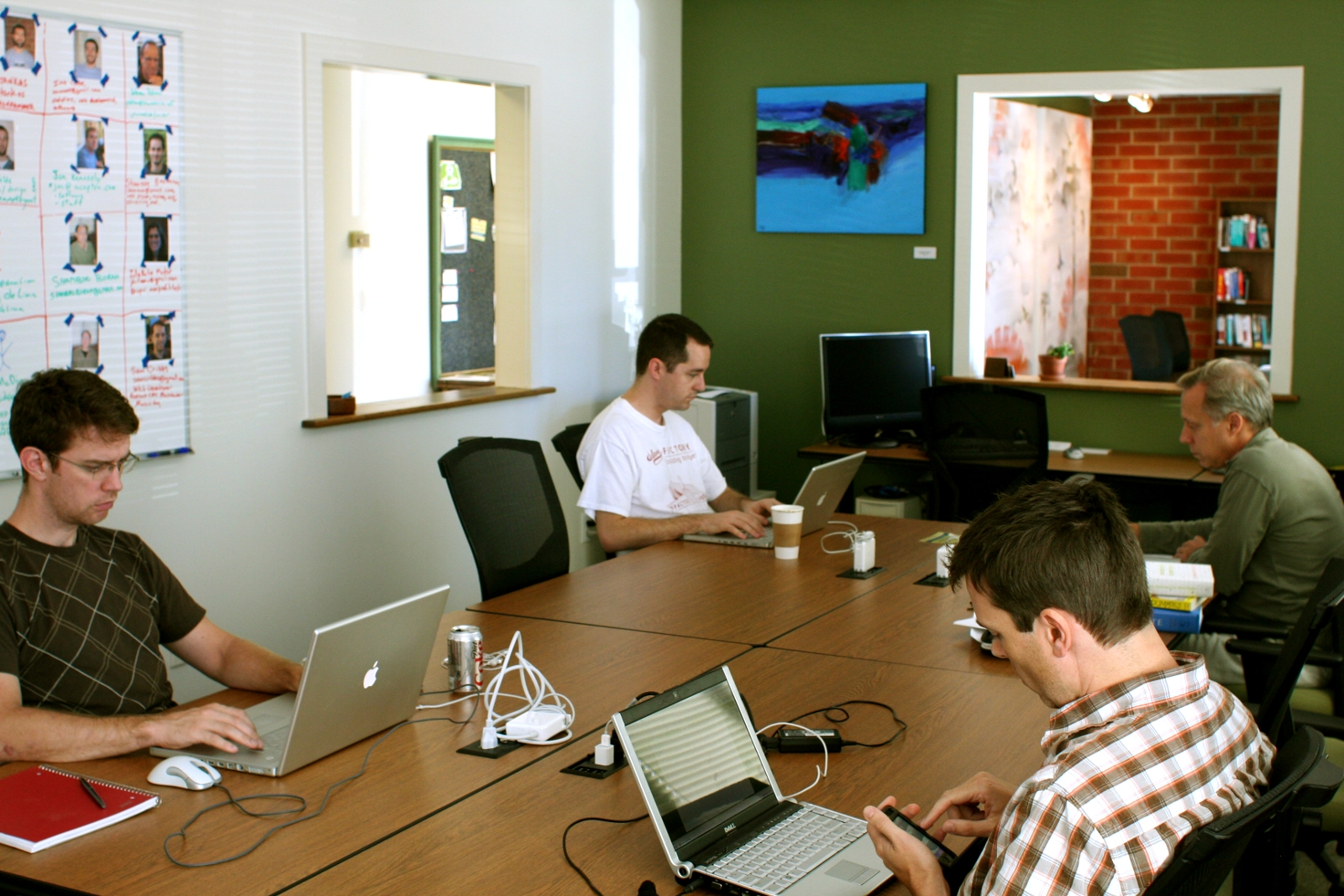
In 2008, Carrboro Creative Coworking opened in downtown Carrboro, North Carolina. At the time, coworking was still a new idea in the United States, and shared professional workspaces were rare outside a few major cities. Carrboro Creative Coworking brought this emerging model to North Carolina, offering flexible workspace and a collaborative environment for freelancers, startups, and independent professionals.
This post gathers the public evidence documenting the planning, launch, operation, and closure of Carrboro Creative Coworking. Taken together, these records support its place as the first coworking space in North Carolina.
Carrboro Creative Coworking was founded by Brian Russell and operated in downtown Carrboro from 2008 through 2011.
Documented Public Evidence
-
Carrboro Citizen — “Carrboro’s Creative Coworking in the Works” (March 5, 2008)
Early local newspaper coverage documenting the concept, planning, and development of the space.
https://www.ibiblio.org/carrborocitizen/main/2008/03/05/carrboro%E2%80%99s-creative-coworking-in-the-works/ -
ScienceBlogs — “Carrboro Creative Coworking Is” (August 21, 2008)
A national blog announcement noting the opening of Carrboro Creative Coworking.
https://scienceblogs.com/clock/2008/08/21/carrboro-creative-coworking-is -
Paul Jones Blog — “Co-working Comes to Carrboro”
Contemporary documentation of the arrival of coworking in Carrboro and the local interest around it.
https://www.ibiblio.org/pjones/blog/co-working-comes-to-carrboro/ -
Carrboro Citizen — “Coworking Catches On” (February 19, 2009)
Follow-up reporting showing the space in operation and documenting the growth of coworking locally.
https://www.ibiblio.org/carrborocitizen/main/2009/02/19/coworking-catches-on/ -
Carrboro Creative Coworking Site
Archived site documenting the space, its services, and its operation from 2008 through 2011.
https://web.archive.org/web/20110911201601/http://www.carrborocoworking.com/ -
Vimeo Video Archive
Video documentation of Brian Russell discussing coworking and Carrboro Creative Coworking during its years of operation.
https://vimeo.com/59058120?fl=pl&fe=ti -
Flickr Photo Archive
Photo documentation of the physical workspace, layout, and community environment.
https://flickr.com/photos/brianr/sets/72157607764534200/ -
Carrboro Citizen — “Carrboro Creative Coworking to Close Its Doors” (July 14, 2011)
Local reporting confirming the closure of the space after several years of operation.
https://www.ibiblio.org/carrborocitizen/main/2011/07/14/carrboro-creative-coworking-to-close-its-doors/
Timeline
- March 2008: Local press documents Carrboro Creative Coworking in development
- August 2008: ScienceBlogs announces Carrboro Creative Coworking
- 2008: Carrboro Creative Coworking opens in downtown Carrboro
- 2009: Additional local reporting documents coworking activity and continued operation
- 2011: Carrboro Creative Coworking closes after multiple years of operation
Contemporary Blog Posts from 2008–2011
During the development and operation of Carrboro Creative Coworking, additional posts were published documenting the early planning, launch, and operation of the space. These posts reflect contemporaneous discussion of coworking as it emerged in North Carolina.
View archived coworking posts:
https://corvus23.com/tag/coworking/
Why This Matters
Coworking emerged in the mid-2000s as a new model for shared professional workspace built around flexibility, collaboration, and independent work. By 2008, coworking spaces were still uncommon in much of the United States, particularly outside major metropolitan areas.
Carrboro Creative Coworking operated from 2008 through 2011 in Carrboro, North Carolina, during the early adoption period of coworking in the United States. The sources listed on this page document the planning, launch, operation, and closure of the space during that period.
This post was written by Brian Russell, founder of Carrboro Creative Coworking (2008–2011), to preserve publicly available references related to the project and its historical timeline.




 Brian C. Russell